
07th March, 2026
 15th June, 2025
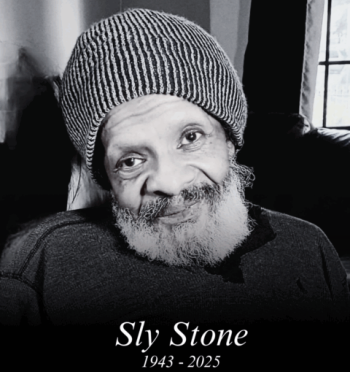
Sly Stone, the mercurial frontman of Sly & the Family Stone and one of funk’s most revolutionary architects, passed away on 9th June, 2025, at the age of 82 after a prolonged battle with COPD and other health complications.
Sly, along with the band created an extraordinary blend of soul, gospel, funk and psychedelia and gave the world a unique sound that is sometimes called – progressive soul. The influence of his (and his band) music is felt to this day in bands & musicians like Red Hot Chilli Peppers and Lenny Kravitz.
Born Sylvester Stewart on 15th March, 1943, in Denton, Texas, Stone was steeped in gospel tradition from a young age. As a teenager, he was a multi-instrumentalist already recording with The Stewart Four, a band he formed with his siblings. In 1966, Sly merged his band, Sly & the Stoners, with his brother Freddie’s ensemble, creating Sly & the Family Stone. From its inception, the group challenged the status quo: it featured a genuine rainbow coalition of Black and white musicians, men and women, with each member contributing equally to the sound, a rarity at the time.
Sly wasn’t just the leader of Sly and the Family Stone. He was the earthquake and the aftershock. Sly was preacher, a producer, a provocateur and maybe the most radical American pop star of the late 1960s and early ’70s. He made music you could move to, but it always moved something deeper too. The horns punched like James Brown’s but soared like jazz. The basslines, especially Larry Graham’s slap-and-pop invention hit you in the chest. The harmonies felt like a congregation. And Sly’s own voice. sometimes silk, sometimes gravel — moved between seduction and sermon with uncanny ease. Just checkout the breakthrough second album ‘Dance to the Music’ (1968), especially the title track Dance to the Music and Higher.
Albums like ‘Stand!’ (1969) and ‘There’s a Riot Goin’ On’ (1971) weren’t just hits, they were statements. ‘Stand!’ gave us I Want to Take You Higher and Everyday People, the latter a sing-along for radical equality that is still relevant and plays sweet. And Riot, with its murky, tape-hiss-laden melancholy, all but invented funk’s darker, more introspective side. It's hard to imagine Prince or Kendrick Lamar without it.
But for all his brilliance, Sly was a man at war - with fame, with expectations, and, eventually, with himself. The ’70s saw him retreat from the spotlight, as drugs and paranoia clouded the mind that once lit up a generation. Albums came slower. Bandmates left. The world kept changing, and Sly slipped further into the margins. In recent years, he made a few appearances. But mostly, he remained an enigma. A prophet who left the stage mid-sermon.
As a listener, it’s hard to separate the man from the myth. But when I put on the track Family Affair, and hear that dusty drum machine and Sly half-whispering into the void, it still cuts through like truth. It reminds me that behind the costumes and chaos was someone trying to hold his people - all people - together through sound.
He once sang, “You can’t figure out the bag I’m in.” He was right. We never could. But we’re still dancing in it. Thank You (Falettinme Be Mice Elf Agin)!
By Meraj Hasan
Meraj Hasan ‘meem’ is a Dubai based business and marketing consultant, poet and a music journalist. He also has a wide range of vinyl in his collection ranging from jazz, blues, classical, rock, pop and old Hindi film albums. Meraj's first book of poems, ‘Khyaalon Ki Tapri’ was an instant bestseller and he has just released his second book of poems, 'Boondon Si Baatein'.

