
21st October, 2026
 01st June, 2026
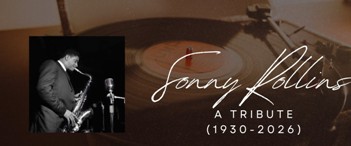
Sonny Rollins, the towering jazz saxophonist known to the world as the “Saxophone Colossus,” passed away on 25th May 2026, at the age of 95. And with him goes not just one of the greatest musicians jazz has ever produced, but perhaps the last true giant from that sacred post-war era when jazz wasn’t merely music—it was a unique invention happening in real time.
Born Theodore Walter Rollins in Harlem in 1930 to parents from the Virgin Islands, Sonny grew up in the heart of a city where bebop was being born in clubs, basements, and smoke-filled nights. By the late 1940s, he was already playing alongside names that now feel almost mythological—Charlie Parker, Miles Davis, Thelonious Monk, and later, his great contemporary, John Coltrane. Yet Sonny never sounded like anybody else. From the beginning, his tenor saxophone had a fullness to it—a muscular, warm, conversational tone that could swing hard one second and suddenly turn philosophical the next.
What made Rollins unique wasn’t just technique, though he had plenty of it. It was his fearlessness as an improviser. Sonny could take the smallest melodic phrase and stretch it into something unpredictable, humorous, profound, even spiritual. Listening to him often felt like listening to somebody think out loud. There was structure, yes, but also risk. He played like a man constantly searching.
His landmark 1956 album ‘Saxophone Colossus’(he was just 26 then) remains one of jazz’s defining statements. Revisiting it over the years, I’ve always been struck by how alive it feels—how modern it still sounds. St. Thomas, with its calypso roots, dances with joy, while Blue 7 unfolds like an entire philosophy of improvisation disguised as a blues tune. In a review I once wrote of the album, I remember calling it “a record that breathes rather than performs.” That still feels true. Sonny’s playing never seemed interested in impressing you; it wanted to pull you into the conversation.
And what a body of work he leaves behind: ‘Tenor Madness’, ‘Way Out West’, ‘Freedom Suite’, ‘The Bridge’, ‘A Night at the Village Vanguard’. Each album captured a different shade of his restless genius. Even his famous retreat in 1959—when he stepped away from performing to practice alone on the Williamsburg Bridge because he felt he could become better—tells you everything about the man. Most legends protect their greatness. Sonny questioned his.
His contribution to jazz goes beyond recordings. Rollins expanded the emotional and intellectual possibilities of the tenor saxophone. He brought Caribbean rhythms into modern jazz, embraced free improvisation without losing melody, and influenced generations of players across jazz, rock, and beyond. Without Sonny Rollins, the language of modern improvisation simply sounds different.
For many of us who discovered jazz through records late at night, Sonny was a doorway. There was always something deeply human in his playing—joy, wit, loneliness, discipline, all tangled together. And now that he’s gone, the silence feels heavier because he truly was among the last of that extraordinary generation that built modern jazz from the ground up.
By Meraj Hasan
Meraj Hasan ‘meem’ is a Dubai based business and marketing consultant, poet and a music journalist. He also has a wide range of vinyl in his collection ranging from jazz, blues, classical, rock, pop and old Hindi film albums. Meraj's first book of poems, ‘Khyaalon Ki Tapri’ was an instant bestseller and he has just released his second book of poems, 'Boondon Si Baatein'.
