
21st October, 2026
 26th June, 2026
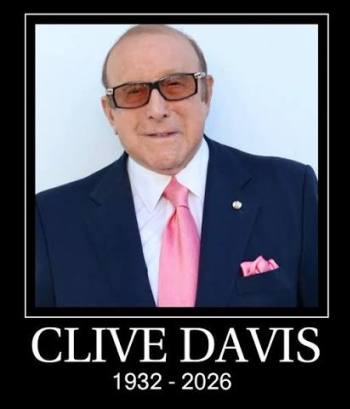
Clive Davis, one of the most influential record executives in the history of popular music, passed away this week. With him goes not just a legendary music producer and label head, but perhaps the finest talent scout the music business has ever known. They called him "the man with the golden ear"—a title he earned over six remarkable decades by doing something almost mystical: hearing a voice once and instantly recognizing a star.
In an industry driven by trends, Davis had an uncanny ability to hear beyond the moment. He wasn't a songwriter, nor was he a musician in the conventional sense. His instrument was instinct. Time and again, he heard greatness where others heard promise.
The list of artists whose careers he shaped reads like a hall of fame. Janis Joplin found one of her earliest and strongest champions in him. He believed in Whitney Houston before the world knew her name, nurturing what would become one of the greatest voices popular music has ever heard. He introduced Alicia Keys to the world, recognizing not just her extraordinary talent but her timelessness. Over the years, he also played pivotal roles in the careers of Barry Manilow, Bruce Springsteen, Billy Joel, Patti Smith, Earth, Wind & Fire, Jennifer Hudson, and countless others. It wasn't simply that he signed artists. He understood them. He knew which songs suited them, which producers would elevate them, and, perhaps most importantly, when to let them simply be themselves.
When many believed Aretha Franklin's finest years were behind her, Davis helped orchestrate one of the greatest comebacks in music history. Her albums in the 1980s introduced the Queen of Soul to an entirely new generation without compromising her greatness. He performed a similar miracle with Santana, whose Supernatural became one of the defining albums of the late '90s, proving that genuine artistry never has an expiry date if placed in the right hands.
From Columbia Records to Arista, J Records, and later RCA, Davis remained a towering presence in the American music industry. Musical fashions changed. Vinyl gave way to cassettes, CDs, downloads and streaming. Disco disappeared. Grunge arrived. Hip-hop conquered the charts. Through it all, Clive Davis remained relevant because he understood one timeless truth: technology changes, but great songs and unforgettable voices never go out of fashion.
As someone who grew up reading album credits almost as carefully as liner notes, Clive Davis's name became a reassuring constant. If his name appeared on a record, you instinctively expected quality. He possessed that rare ability to balance commerce with artistry, to build careers rather than simply manufacture hits. In today's algorithm-driven music business, that kind of long-term vision feels almost impossible.
His greatest contribution wasn't merely the number of platinum records or Grammy Awards attached to his name. It was that he changed the course of popular music simply by believing in people before the rest of the world did. Every generation had its defining voices, and more often than not, somewhere behind the curtain stood Clive Davis, quietly making sure those voices were heard.
The artists will continue to sing. The records will continue to sell. The songs will continue to find new listeners. But the man with the golden ear—the man who could hear tomorrow long before anyone else—is gone.
And popular music is immeasurably richer because he listened.
By Meraj Hasan
Meraj Hasan ‘meem’ is a Dubai based business and marketing consultant, poet and a music journalist. He also has a wide range of vinyl in his collection ranging from jazz, blues, classical, rock, pop and old Hindi film albums. Meraj's first book of poems, ‘Khyaalon Ki Tapri’ was an instant bestseller and he has just released his second book of poems, 'Boondon Si Baatein'.
