
22nd October, 2026
 19th October, 2026
There are musicians you admire from a distance, and then there are those who become part of your life without ever knowing you exist.
For me, Mahesh Tinaikar was one of the latter.
I remember watching him play at Rang Bhavan in Bombay in the late eighties and early nineties. And then later when Independence Rock was resurrected in 2022. The energy, the sound of the guitar, the sheer command he had on stage. He could make those six strings sing, scream and soar, and leave you wondering how one person could coax so much out of an instrument.
I didn’t know Mahesh personally. I was one of the many people who watched him play, listened to his music and carried those memories away. But when someone like him passes, the loss can feel surprisingly personal.
To understand what Mahesh meant to a generation, it helps to remember what Indian rock was like when Rock Machine emerged.
In the eighties, many of us discovered rock through records and cassettes, listening to Deep Purple, Iron Maiden, The Who, Thin Lizzy, UFO, Van Halen, Rush and many others. We learnt the riffs, air-guitared, argued about musicians and dreamed of the concerts we read about or heard on records. But there was a considerable distance between listening to international rock bands and imagining that Indian musicians could make their own mark in the same world.
There were few established avenues for original rock music, limited recording opportunities and no well-developed industry waiting to support a band. The musicians who took up the challenge had to build much of that world themselves.
Rock Machine emerged in the early eighties, with Mahesh on lead guitar. Alongside musicians including Mark Selwyn, Ian Santamaria, Aftab Currim and Suresh Bhadricha, he helped create a band that would become an important part of India's rock story. The line-up evolved over the years, with musicians such as Jayesh Gandhi, Uday Benegal, Mark Menezes and Zubin Balaporia contributing to its journey.
Mahesh’s route to becoming a guitarist was anything but conventional. He recalled picking up the instrument at around age 19 or 20, having wanted to play for years. His parents worried that music would not provide a living, and he tried looking for another job. At one point, he was about to become a sailor on a merchant ship carrying cattle to Kuwait. But when he boarded and saw the cattle, he couldn’t go through with it. He walked off the ship.
The early years were hardly glamorous. Rehearsals stretched for hours. The band had to develop its sound, stagecraft, lighting and performances, often relying on friends to help behind the scenes. Travel meant carrying equipment, making do with what was available and finding a way to get to the next gig. There was no established machinery to fall back on.
What they had was the music, the conviction that it mattered and the determination to keep going.
Mahesh’s guitar was central to that sound. Technique was certainly part of his appeal, but it was not the whole story. What made his playing memorable was the combination of power and melody, the ability to make a solo feel like more than a display of virtuosity. Listen to Turn It On, where the lead has a strong sense of feel, or Polyvinyl Lady, where the guitar takes a more melodic path. There was fire in his playing, but also a sense of direction. The notes did not simply arrive in a rush; they seemed to take you somewhere.
There was a remarkable freedom in the way he played, an almost effortless command of the instrument. In Bowl of Madness, you hear the force and intensity of his lead playing; in Believing, the memorable riff and the solo show another side of that command. It was never simply about how many notes he could play, or how quickly. It was about knowing which notes mattered, when to let them fly and when to let them breathe. That was the difference.
You did not need to understand the technicalities or explain what made one solo different from another. You only had to let yourself be drawn into the music. Songs such as Rock ’n’ Roll Renegade and Pretty Child offered different ways into the band’s world: one an assertive rock anthem, the other a more melodic song that reached a wider audience. The guitar was part of what made those songs memorable, but it was never music that existed merely to demonstrate a musician’s skill. It spoke to you before you had to think about how it worked.
At Rang Bhavan, watching Mahesh play, that was what stayed with me: the sound, the energy, the way his guitar could hold your attention amid all the noise and excitement of a live performance. Time has inevitably blurred some of the details of those evenings, but the impression of him playing remains.
Rock Machine's debut album, ‘Rock ’n’ Roll Renegade’, arrived in 1988, followed by The Second Coming in 1990. Tracks such as Polyvinyl Lady, Turn It On, Bowl of Madness and Believing showcased different facets of the band's sound, giving Mahesh room to move between melodic phrasing and full-blooded rock guitar.
These records were made at a time when recording facilities, budgets and the market for original Indian rock imposed real limitations. The band was still learning, experimenting and finding its voice. But it was making the music anyway, and that is part of what makes those albums worth revisiting.
In 1988, Rock Machine travelled to Moscow as part of the Festival of India. Later recollections from people associated with the band describe how the experience helped galvanise the making of its debut album. The trip offered a glimpse of a world beyond the familiar circuit and helped turn an ambition into something more tangible.
Those numbers tell a story beyond the size of a crowd. Indian rock was beginning to find an audience willing to turn up, listen and believe that the music being made here deserved its place on stage.
The Independence Rock festival, which began there in August 1986, became an important fixture in the history of Indian rock. In a later interview, Mahesh recalled playing to around 800 to 1,000 people in the rain. It is a telling image of those years: imperfect conditions, an audience that turned up regardless, and musicians determined to make the show happen.
My memories are from the years that followed. I cannot claim to remember every song or every detail of those evenings, but I remember the feeling of watching Mahesh play. The guitar filled the air, the energy travelled through the crowd, and for those moments the outside world seemed to disappear.
Another guitarist, Floyd Francisco Fernandes, recalled Mahesh in a written tribute after his passing, evoking the black Ibanez guitar, the rainbow strap and the intensity of a player whose outward demeanour could appear calm even as his music blazed.
“Mahesh’s persona on stage was absolutely still. He had no facial expressions, or showmanship, but every note that he played pierced your heart. That’s what made him stand out,” said musician Ravi Iyer, who formed a rock band in the late 1980s, Witch Hammer.
In 1993, Rock Machine became Indus Creed, marking another stage in the band's evolution. The music began incorporating Indian instruments and textures, drawing on different traditions without abandoning its rock foundations. Pretty Child brought the band wider recognition, and Indus Creed continued to occupy an important place in the story of Indian rock.
The band split in 1997 and reunited in 2010. Mahesh continued to make music, working with Whirling Kalapas alongside Uday Benegal and Zubin Balaporia, and composing music for television commercials and documentaries. His later interviews reveal a musician who remained curious about his craft and attentive to the changing musical landscape.
In 2023, he spoke about improvements in equipment, the emergence of younger guitarists and the continuing need for original music and places where musicians could perform it.
He had helped build a scene, but he had not stopped paying attention to where it was going.
The word pioneer is often used when a musician dies. Yet being a pioneer is about more than arriving early or doing something before others. It is about helping create a path that people can follow.
Mahesh was part of the generation that made Indian rock a credible possibility for those who came after. His contribution lay not only in the music he recorded or the performances he gave, but also in what other musicians could imagine after seeing him play.
That is a legacy worth recognising, particularly now, when original Indian music has so many more avenues through which to reach an audience. The circumstances have changed, but the foundations were laid by musicians who persevered when the path was far less certain.
The venues change. The crowds move on. New musicians take the stage, and new generations find their own heroes. That is as it should be. But every now and then, a sound brings an earlier time rushing back: the lights, the crowd, the guitar and the feeling that anything is possible.
Mahesh Tinaikar gave us plenty of reasons to remember that feeling.
The sound of a generation has fallen silent. It has not been forgotten.
Debolin Sen
Debolin Sen is a media and entertainment professional with over 25 years of experience across advertising, publishing, travel and digital businesses. An admirer of Indian rock, he writes from the perspective of a listener, observer and collector of memories.
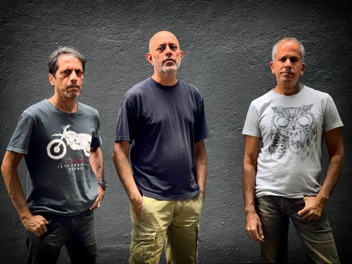
Photo credit: Rolling Stone India and Conde Nast Traveller (Richard Pereira)

