
23rd July, 2026
 01st June, 2025
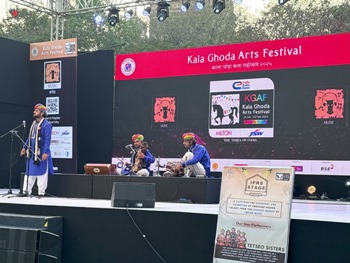
The Desert KATS from Barmer, Rajasthan enchant with Rajasthani folk melodies, are brilliant musicians and singers from the Langa community in western Rajasthan India were one of the performers at the Kala Ghoda Arts Festival that took place on the 26th and 27th January 2025. The KGAF Cross Maidan, Kala Ghoda, Mumbai also celebrated its silver jubilee this year.
The Desert Kats transported audiences to the vast expanses of Barmer, Rajasthan with their evocative performances of Langa community music. This talented group of musicians presented traditional tunes from the desert, employing instruments like the Sarangi, Khartal, and Algoza, each carrying the weight of centuries-old musical practices. The performance was a moving journey through Rajasthan’s rich musical heritage, unraveling the captivating stories woven into its desert soundscapes.
Verus Ferreira spoke to Kasam Khan from Desert KATS to know more about their music and the songs they perform.
What does performing on the IPRS Stage at the Kala Ghoda Arts Festival mean to you, and how does it help in promoting your music?
Kasam Khan: Performing on the IPRS Stage at the Kala Ghoda Arts Festival is a proud moment for us, especially as artists from Barmer, Rajasthan. It gives us the opportunity to showcase the deep cultural roots of our music and share the stories of our ancestors. For centuries, our community has performed for Yajmans (patrons) who supported our music, and now, through these platforms we can connect with a wider, diverse audience. This visibility helps in promoting the beauty of our traditional sounds and bringing attention to the Langa community's rich musical heritage.
How do Desert KATS keep the rich musical traditions of the Langa community alive in your performances?
KK: As Desert KATS, we remain dedicated to preserving the authentic traditions of the Langa community through our performances. We continue to perform the same way our ancestors did for their Yajmans (patrons), passing down stories through music. Our songs and performances capture the essence of Barmer, Rajasthan, and the spirit of our community. Through initiatives like Langa Vikas Sanstha, we ensure the younger generation is trained in these traditions, keeping the legacy of our music alive for the future.
Can you explain the significance of the rare instruments you use, such as the Khartal, Algoza, and Sarangi, and how they shape your music?
KK: In our performances, instruments like the Khartal, Algoza, and Sarangi hold immense significance. The Khartal creates the rhythm that binds the melody, while the Algoza brings the distinct sound of double reeds that symbolize the soul of Rajasthan. The Sarangi’s deep strings resonate with the emotions of our songs, often telling tales of love, valor, and devotion. These instruments are the heartbeat of our music, shaping its sound and ensuring the timeless traditions of our community continue to speak through our performances.
What is your approach to blending traditional Rajasthani folk sounds with modern or global influences?
KK: While we remain true to the traditional sounds of Barmer, Rajasthan, we believe in evolving and adapting. By blending our folk music with modern influences, we introduce it to new audiences without losing its essence. Collaborating with global artists allows us to experiment and create a fusion of styles, bringing our music to a larger stage while maintaining its authenticity. This fusion helps us stay connected to both our roots and the modern world, ensuring our music continues to grow and resonate with people everywhere.
What genre of music do you primarily perform, and do you experiment with other genres as well?
KK: Our roots are firmly planted in Rajasthani folk music, but we do not restrict ourselves to just one style. We enjoy performing a variety of genres such as Bollywood, Sufi, and fusion music based on the occasion and the audience's preferences. For instance, tomorrow’s performance will feature a Sufi mix, showcasing how we adapt our music while maintaining the essence of our folk traditions.
Have you ever recorded any original compositions?
KK: In the past, we have performed live on radio, but we have yet to record and release any original compositions. Our primary focus has always been on live performances, where we can engage directly with our audience and showcase our music in its most authentic form.
What music do you listen to in your personal time?
KK: I have a deep love for traditional Rajasthani folk music, but I also find solace in the poetry of Sufi saints, particularly Baba Bulleh Shah. His spiritual verses are powerful, and they resonate with the themes we explore in our music.
Do you have a favorite Bollywood song?
KK: Yes, one of my favorites is Ant Bahar Di Khabar Na Khayi, Rangi Rang Banaya, Mola Aadmi Banaya, which is based on Baba Bulleh Shah's poetry. I enjoy performing this song because it combines my love for both Sufi poetry and Bollywood music.
Which Indian singers do you admire the most?
KK: In classical music, Shankar Mahadevan is someone I truly admire. As for folk music, I have great respect for the elder musicians who have preserved these traditions. Their dedication to the art form is something we draw inspiration from.
What are your long-term goals as an artist?
KK: My journey as an artist began in childhood, and it’s been both rewarding and challenging. After COVID, the opportunities for folk musicians dwindled significantly, which is why we formed Desert KATS, with the help of Koushik Dutta, who suggested the idea. Now, we are focused on rebuilding our presence and performing at prestigious festivals, both in India and abroad, and ensuring that folk music remains relevant.
Do you have a specific festival in mind?
KK: The Kala Ghoda Arts Festival is already a special one for us, and we are excited to be a part of it again this year. It’s a festival that celebrates art and culture, and we are honored to contribute to it.
A question you might always been asked at interviews, where did you get the name 'Desert Kats' from?
KK:The four artists in our group, Kasam Khan, Aslam Khan, Pathan Khan and Sikandar Khan, each have their own unique lyrical contributions, and it is their music that defines us. We prefer to stay connected to our roots, and the name reflects our Rajasthani heritage. So, the name is not just for show, it’s based on our music and culture.
Interviewed by Verus Ferreira

