
20th May, 2026
 15th August, 2025
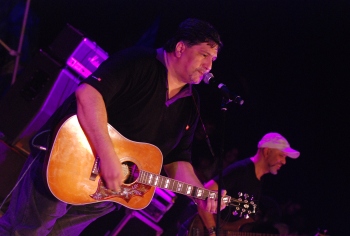
Farhad Wadia’s musical journey has been a colourful one, from trailblazing Mumbai’s rock scene and founding Independence Rock now rejuvenated to maintain rock’s place in India, he talked to Reagan Gavin Rasquinha about music, I-Rock and more
Having a video chat with Farhad, has he settled in for the evening down in Dallas, Forth Worth where he now lives, feels like diving into the very heart of India’s rock and roll history.
From the moment he starts talking, it’s clear that the man who played a pivotal role in shaping the western music scene in India still carries that raw energy and passion for the sound that defined a generation. To bend a Jethro Tull lyric, ‘you’re never too old to rock ‘n’ roll.”
He gets into those early days in the music scene as he recalls the moment that lit the fire. “It was 1985, and I started my band Mirage with a few friends. We played some college gigs, but honestly, there wasn’t much going on back then. Besides Mood Indigo and Malhar, there weren’t any concerts. And then Malhar dropped rock bands completely, with the then-Principal of St. Xavier’s College calling it the ‘devil’s music’.” He lets out a laugh, but there’s a knowing look in his eyes. “That’s when I knew we had to do our own thing. There was no other way.”
And doing his own thing led to the birth of something huge—Independence Rock, the OG rock and metal festival entering its dirty thirties, that’s practically legendary in India’s music scene. That is the point of this interaction. After a hiatus some years ago, it is back with new sponsorship and two gigs scheduled in Mumbai, on 16th and 17th November.
So, what was it like, kicking off Independence Rock? Perhaps he’d better start from the beginning? Farhad’s eyes light up. “Man, that’s a story! In ’86, we were supposed to play at Malhar with Rock Machine, but the show got cancelled. Some kid from Xavier’s, Anurag, came to us and said, ‘Let’s do it at Rang Bhavan.’ He even plastered Malhar with handwritten posters! But the day of the gig, he disappeared. No money, no nothing. We had set up, sound-checked, and realized we had two options, either pack up or just do the damn gig and pay everyone with whatever we could collect at the gate.” He pauses, clearly reliving that moment. “We didn’t even have proper tickets. But guess what? About 4,000 kids showed up. We collected enough to cover the sound, lights, and still made more than what we were supposed to be paid. That’s how Independence Rock was born, man.” It’s wild to think how that one decision sparked something that would go on for decades.
Talking about how he kept the energy alive year after year - What was the magic that kept it going strong, even with all the ups and downs? He chuckles, shaking his head. “The magic was the kids, the crowd. They showed up no matter what. We had some insane years. Like the one time it rained so hard the whole place was flooded, but people still came, and the show was even bigger than before. Or the time Pramod Navalkar tried to stop it, and Balasaheb Thackeray stepped in and had our backs. There was even a time when the Azad Maidan Police Inspector refused permission. I had to go to court, represent the event, and win the right to put the show on.” He smirks. “It was always a fight, but that’s rock and roll, right?”
Diving deeper into the influence of the festival, he says it was more than just a that; it was the proving ground for so many bands. A zeitgeist of the time. So how does he think Independence Rock shaped the Indian rock scene? Did any bands stand out for you during that era? Farhad doesn’t hesitate. “It became the go-to gig for Indian bands, a rite of passage. Every major act got a piece of the spotlight there—Rock Machine, Indus Creed, Parikrama, even AR Rahman’s band. Pentagram, Zero, Shiamak Davar, Girish and the Chronicles, Brahma—the list is endless. These guys made their names there, and it was amazing to see.”
In 2015, Farhad made the move to the US, which must’ve been a huge shift, especially leaving behind the festival he helped build. So, did moving to the US bring about a change in the way he approached things? He nods, thinking about it for a second. “It did, yeah. I had to step away from that fest for about eight years, but we brought it back in 2022 with VG Jairam and Neale Murray from Hyperlink Brand Solutions. But creatively? The pandemic gave me time to rediscover music. I started doing covers, and putting out originals on YouTube. I try to release a song almost every week now. It’s been fun, and it’s kept me connected.”
And how’s jamming in the US? Is he able to perform much? Farhad laughs. “Not really, man. I play with a bunch of guys on the weekends, just for fun. But I haven’t performed much. It’s a different vibe here, but living in Austin, Texas, I’ve really gotten into country and Americana. Today’s country music is basically yesterday’s Southern rock, and it’s all around me here. I dig it.” He talks about collaborations next. Farhad’s known for working with some heavy hitters in the Indian music scene, and has that continued since his move?
Excited about this, he says, “Yeah, my dear friend Indrajit Sharma, or Tubby as most people know him, and I have been working together. He’s a big name in the Indian film industry, and we’ve already put out three originals I wrote. He produced them, played on them, and we’ve got three more in the pipeline. As for collaborations here in the US? Not so much. I’ve been busy running a radio network but I’m always up for new projects.”
And what lessons has Farhad has picked up along the way. He’s seen it all—from battling with cops in Mumbai and politicians to pushing boundaries in a new country. He smiles, the kind of smile that says he’s been through the trenches and come out the other side. The biggest lesson? “If you want to do something, plan for it and go for it. Perseverance always comes through. And in India? Anytime the government, cops, or politicians try to stop you, you fight for what you believe in and push back. You don’t stop.”
Finally, here is some advice the next generation of musicians can take to heart. His answer is straightforward but never too weary with wisdom. “If music is what drives you, then work on it. Practice, play live, write your own stuff. In today’s world, you don’t need a record company to get noticed. Just look at guys like Sooraj Cherukat, aka Hanumankind. He played IROCK in 2013, moved to the US, and worked at Goldman Sachs, but kept at his music. Now his song ‘Big Dawgs’ has over 100 million views on YouTube. If you’re good, you’ll break through. Just keep at it.”
He’s always got something cooking, so what should we look out for on his free YouTube channel? He grins. “I try to put out one cover a week. The last one was an acoustic version of ‘Dancing in the Dark’ by Springsteen. Up next, I’m doing Clapton’s ‘Before You Accuse Me’ and ‘Lyin’ Eyes’ by The Eagles. And then there are the three originals I’m working on with Tubby. Those will be out soon. So yeah, stay tuned, man.”
From starting a rock revolution in India to jamming on weekends in Texas, Farhad Wadia’s journey has been all about keeping the music alive, no matter where he is. And as long as he’s playing, you can bet that spirit of rock and roll is still burning bright.
By Reagan Gavin Rasquinha
Reagan Gavin Rasquinha is a writer who moves between high culture and backroom blues, tracing the quiet revolutions that shape what we see, feel and hear.

