
07th June, 2026
 29th January, 2026
Walking out of the media screening ‘Shelter’, you do not merely feel as though you have seen another film featuring Statham — instead you feel as if you have engaged in an experience.
Director Ric Roman Waugh, recognized primarily for his realistic thrillers like ‘Greenland’ and ‘Angel Has Fallen’, takes Jason Statham's well known action figure and infuses it with a much greater depth, although the screenplay sometimes stumbles over its own high aspirations.
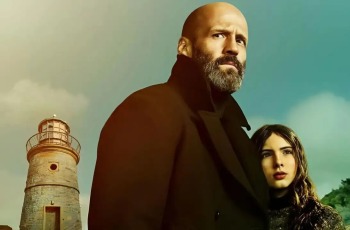
To put it simply, ‘Shelter’ operates as follows: Statham portrays Michael Mason, a secluded former hitman living a life away from society on an isolated stretch of the Scottish shoreline. He shows very little interest in the world around him; his cabin mirrors his emotional detachment. Then Jessie enters the scene — a young girl he saves after facing a fierce storm — and that single act of kindness triggers a violent series of events, pulling him back into danger and away from his solitude.
What stands out immediately and feels refreshingly relatable is Waugh’s choice not to dive headfirst into action sequences. The film dedicates significant time to establishing Mason’s quiet existence: expansive visuals of a dreary sea alongside a barren shore, a man who spends his days drinking, and a dog as his only friend. It’s atmospheric instead of flashy, and this thoughtful setup pays off, making the subsequent action feel worthwhile instead of feeling obligatory.
This film tends to represent Statham in a more reflective role, one that allows the audience to take a glimpse at the human beneath the tough facade. He is indeed gruff, and his fight scenes are raw and precise, the choreography is brutal and unapologetic — but there’s an emotional journey present as well: a man wrestling with his violent history while striving to protect a life, innocent and pure.
A significant part of that emotional thread is contributed by Bodhi Rae Breathnach, who plays Jessie. Her portrayal carries a genuine vulnerability throughout the film and it supplies the emotional core that the action occasionally lacks. The dynamic between them transforms from the cautious interdependence evolving into a semblance of trust which tends to fuel the film’s emotional impact.
Bill Nighy portraying the chilling antagonist with connections to Mason's past, introduces a layered menace to the narrative. Naomi Ackie brings intelligence and moral depth to her role. Collectively, the cast adds substantial weight to an otherwise standard plot progression.
So what does Shelter truly represent? It is an action thriller striving to transcend mere violence for entertainment. It narrates the tale of a fractured man and a frightened girl, highlighting the lengths one might go to safeguard the other. It incorporates established genre elements — the solitary hero, the reluctant protector, betrayals by the government — yet there is sufficient emotional grounding that you become invested not only in what unfolds next, but in the significance behind it.
Final Verdict: Shelter may not reinvent the action genre, but it delivers a solid, emotionally grounded thriller powered by a restrained yet powerful Jason Statham performance. It’s a film that respects both its audience and its characters — making it well worth a watch for action lovers. A solid theatrical watch.
Cast: Jason Statham, Bodhi Rae Breathnach, Naomi Ackie, Bill Nighy
Director: Ric Roman Waugh
Distributor: Black Bear Duration: 1 hour, 47 minutes
Release date: 30th January 2026
Rating: ****
Reviewed by Priyanka Soni
Priyanka Soni is a multidisciplinary media professional, journalist, and creative consultant with a diverse background spanning voice, music, writing, and digital production. She has worked as a voiceover artist for several leading Indian institutions contributing to large-scale public and commercial communication projects. With over 15 years of experience as a trained singer and nearly a decade in professional writing, Priyanka has contributed articles, blogs, and web content across fashion, lifestyle, and cultural platforms. An avid follower of music, cinema, and performance culture, she brings both technical understanding and emotional sensitivity to her reviews. Through her writing for MusicUnplugged, Priyanka aims to document, interpret, and celebrate contemporary music and film experiences for wider audiences.
