
07th March, 2026
 01st August, 2025
Maybe it's the sound, maybe it's the analog warmth or maybe it's a certain x-factor that made this album sound like a fresh listening on vinyl. Reagan Gavin Rasquinha recalls the first time he heard it, completely by chance and a friend's father's pristine LP collection.
Abbey Road – The Beatles
It was sometime in the summer of 1995 or 1996. I was in junior college. A friend had invited a few of us over for tennis, just a regular Mumbai afternoon, the kind that hangs in the air with no agenda. His father had a turntable. That already gave the household a certain elevated status. Most of us were still on cassettes. CDs were coming in, but they weren’t the main currency yet. Vinyl was not common, and certainly not played cleanly. What I didn’t realize was that this would be the first time I’d hear ‘Abbey Road’ the way it was meant to be heard.
The needle landed gently on Come Together.
The bass entered with weight. Not aggressive, but full. Paul McCartney’s playing moved the air. It pulled your attention and sat confidently inside the rhythm. It wasn’t loud for the sake of being loud. It was articulate. At the beginning of the track Lennon sang the now-infamous line, Shoot me, the “me” half-buried and easily missed on most mixes, especially on cassette or CD versions. I didn’t even realise what he was saying until much later, when I went down the rabbit hole of isolated vocal stems and fan trivia. But on that day, all I knew was that the sound was different. Not cleaner. Not even richer. Just more PRESENCE. Those two words were eerily prophetic.
Something followed, and Harrison’s guitar line was as expressive as the vocal. The precision of it, the tone, the clarity in the layering - it wasn’t just romantic, it was structurally elegant. The track played like it had been handled with care. Maxwell’s Silver Hammer came next. Often written off as playful or frivolous, but even there, the production stands out. You can hear the Moog synthesizer in the background, adding a kind of synthetic brightness under the surface. It isn’t dominant, but it gives the track a slightly surreal undertone that lifts it just enough out of vaudeville.
Then Oh! Darling with the vocal unvarnished, pushed to its edge. Pounding pulchritudinous piano. The song sounds like it was recorded live to tape, with the bleed and strain intact. The percussion fills sit nicely in the mid-range and you can hear the way Ringo shapes the drums to support the emotion rather than push through it. Octopus’s Garden has a childlike bounce to it, but again, it’s tight. Ringo’s voice is easy, but George’s guitar work carries the arrangement. Then I Want You (She’s So Heavy) closes out Side A.
This is where things became intense. The repeated title phrase, hot guitar licks traded back and forth between Lennon and Harrison face to face with stoned focus, creates a trance-like build. The Moog synthesizer returns here as well, not as melody but as white noise - growing, swelling, creating an almost claustrophobic space. It’s not subtle. It consumes the room by the end, and then, without warning, the track cuts off.
Side B begins with Because. Harmonically complex, vocally blended, and underpinned by a harpsichord and Moog, the song feels suspended. The chord structure was reportedly inspired by Beethoven, reversed and reassembled by Lennon and given its own kind of weightless dignity. It’s carefully constructed, and you can hear the intention in every note. Even the allegedly Spanish phrasing which is actually nonsense words Lennon composed "questo obrigado... tanta mucho...cake and eat it.... mundo paparazzi... chick-a-ferdi..." et. It sounds so sincere you think it means something. I did! Lol! The lyrics - half real, half invented, partly nonsense - don’t matter as much as the mood.
What follows is the suite. You Never Give Me Your Money sets the tone. It begins with piano and layered vocals. The lyrics are about business issues of the band. But musically, the track keeps evolving. It’s nearly three songs in one. The final section turns into an extended jam, especially in jam-style alternate takes, and becomes a kind of rolling groove that feels loose but not unplanned.
Sun King follows. It leans clearly on the influence of Fleetwood Mac’s Albatross. You can hear it in the tone of the guitar and the languid tempo. The track washes in and out like a tide. Then Mean Mr. Mustard, Polythene Pam, and She Came In Through the Bathroom Window flow one into the other. They’re not deep cuts in the lyrical sense, but they’re shaped with precision. Every measure is serving the next transition.
Golden Slumbers changes the tempo and the mood. It is built around an adaptation of a 17th-century poem, but musically it opens up with strings and a descending piano figure. McCartney’s vocal is strong and unguarded, leading directly into Carry That Weight, which features a reprise of You Never Give Me Your Money and acts as a sonic link before the final statement.
Then The End.
The solos - eight bars each - rotate between McCartney, Harrison, and Lennon. Each guitarist keeps his identity intact. McCartney is melodic and slightly urgent. Harrison is composed, graceful. Lennon is raw and unpredictable. Ringo, who famously disliked solos, is given his space and delivers a focused, energetic drum passage that doesn’t overreach.
The final vocal comes in: “And in the end, the love you take is equal to the love you make.”
It’s not a profound lyric on its own. But placed exactly there, Maybe it was something that the fans really read into. Some kind of a cosmic equation… Or maybe just a typical Gemini type throwaway line. Something McCartney could do that was read into and something Lennon could conjure up out of almost nonsensical stream of consciousness that somehow made sense in an obtuse way. Whatever it was, it fit.
Then silence and you think it’s over.
And then Her Majesty. Originally cut from the suite and spliced onto the end of the master reel by one of the engineers possibly Alan Parsons or Chris Thomas, both of whom were involved, along with Geoff Emerick and Jeff Jarratt. The instruction was to keep everything, so it survived. McCartney laughed when he heard it and decided it should stay. That was typical of their final period. Nothing too sacred. Everything still allowed to surprise.
‘Abbey Road’ was recorded with intention. George Martin returned to produce, but only after they agreed to treat the sessions with focus. After the exhaustive White Album (some say it is the best, with a certain diabolical presence to it… A certain almost eerie presence. It’s not possible to listen to the album that is the White Album and feel comfortable at the end of the double set. It leaves you feeling kind of unsettled in a strange way maybe it’s the mythos around that album… The songs mostly fleshed out in India, then the Escher demos at George Harrison‘s place that was called Escher and then the sessions which were again unlike anything they ever did before and each album of this was like that, the stark white, the hold-nothing-back feeling), this was a pivot back to polish but with newer tools and attitudes. The use of the Moog synthesizer, multi-part suites, and cross-track segues pointed forward. The album isn’t defined by one idea. It is the sum of many. It is polished without being cold. Emotional without being performative. Layered but not labored.
After that came, Let It Be that was originally supposed to be called Get Back, which seemed like it was recorded it in a large basement, probably predicting the lo-fi movement. Actually, they did record that as well as some of the ‘Abbey Road’ early versions in their Apple office building basement. And the sessions for the Get Back/Let It Be album actually is way more interesting than the final album as it does sound raw. It kind of grows on you. You get to like those rough edges. Makes them seem more human and relatable in a way. The 30 discs that combines the Get Back sessions with the beginnings of the ‘Abbey Road’ tracks are a subject for another day.
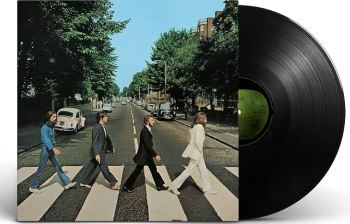
Cover up: the story behind the album cover
There is an entire saga behind the cover of Abbey Road.
Before the idea of simply crossing the street was ever mentioned, the Beatles considered several outlandish options. At one point, someone proposed that they fly to Mount Everest, shoot the cover at base camp, and even name the album Everest after a brand of cigarettes one of their studio engineers smoked. Another suggestion was to rent the luxury liner Queen Elizabeth 2, sail from America to England while throwing a party, and have the cover photographed mid-voyage.
Other ideas included traveling to Egypt and cordoning off one of the pyramids, or heading to the Sahara Desert in Morocco to stage a cover featuring people of different races walking toward them in a symbolic image of humanity. There was even a proposal to use a Greek island that the Beatles had bought in 1967, set up a kind of futuristic commune there, and shoot the cover. By the time of Abbey Road, that island had already been sold.
Many of these conversations happened in lavish settings. They often rented out the entire Ritz Hotel in Paris for the weekend just to hold meetings. They also debated at their Apple Corps building at 3 Savile Row in London, the one that had been painted from top to bottom in psychedelic designs by the Dutch art collective The Fool.
Eventually, practicality won. After weeks of these grand concepts, the band grew tired of the logistics. During one of their meetings, John Lennon jokingly suggested they do the photo in a lunatic asylum. Instead, it was Paul McCartney or possibly Ringo who said, “Why not just step outside and take the picture on the zebra crossing?”
Photographer Iain Macmillan arrived that morning, climbed a stepladder, and in just a few minutes shot a series of photographs of the band walking back and forth across Abbey Road. The fifth shot was chosen for the cover.
McCartney appeared barefoot, which led to one of the most famous rock conspiracies of all time: the “Paul is dead” rumor. Fans, egged on by an American DJ, claimed that McCartney had died in 1966 and been replaced by an impostor. They saw clues everywhere, including this cover. John Lennon in white was said to be a clergyman, Ringo in black the undertaker, George Harrison in denim the gravedigger, and McCartney the corpse because he was barefoot.
McCartney later dismissed it, saying he had been wearing flip-flops that day but took them off because it was hot. He thought being barefoot would make an interesting visual contrast. Lennon later added that his white suit was simply one of his favorites because it gave him what he jokingly called a “Humphrey Bogart look.” There was no funeral symbolism, no coded message. Just four men walking across the road in front of the studio.
And that, in the end, became one of the most iconic album covers in music history.
By Reagan Gavin Rasquinha
Reagan Gavin Rasquinha is a writer who moves between high culture and backroom blues, tracing the quiet revolutions that shape what we see, feel and hear.

