
07th March, 2026
 01st October, 2025
Musicians and tattoos are nothing new, but few tattoo artists have become part of rock history in the way Dutch tattooist Henk Schiffmacher has with his artwork for the Red Hot Chili Peppers, finds Reagan Gavin Rasquinha
From punk to metal to hip hop, ink has been the visual backbone of signature sounds. Every tattoo tells a story, some as personal as scars, others as loud as an anthem. But few artists bridged the gap between skin and record sleeve quite like Dutch tattooist Henk Schiffmacher, better known as Dr. Hank or Hanky Panky. In the early nineties, he left his mark on both the bodies of the Red Hot Chili Peppers and the sleeve of their breakthrough record, ‘Blood Sugar Sex Magik’. Ah, the glorious nineties… said with not just a small tinge of nostalgia.
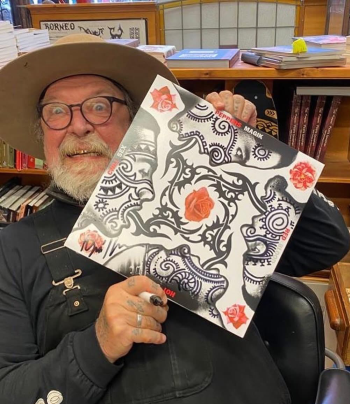
Schiffmacher’s connection with the band ran deeper than design. He tattooed several of the members, including Anthony Kiedis, whose thunderbird back piece became one of rock’s most recognizable works of body art. When the group turned to him for the cover of their 1991 album, the result was just as indelible: four faces arranged around a blooming rose, with thorny vines emerging from their mouths. The image was stark, sensual and confrontational, echoing the band’s own mix of lust, rebellion and spiritual searching.
The sleeve became part of the album’s identity, an extension of the music itself. It was the moment when tattoo culture, long on the fringes, found its way into mainstream rock’s most visible artifact: the vinyl cover. Schiffmacher, in that sense, wasn’t just decorating a package, he was helping set the tone for how the world would see the Chili Peppers at their peak.
The sound behind that sleeve was forged in an equally unusual place. Producer Rick Rubin had moved the band into a sprawling Hollywood house once said to have belonged to Houdini. Haunted or not, it shaped the record’s atmosphere. Rubin wanted them to live where they recorded, believing the environment would bleed into the music. Drummer Chad Smith, spooked by the setting, commuted instead. The others stayed, soaking up the strange energy of the mansion.
At just 21, guitarist John Frusciante added layers that shifted the band beyond their funk roots, giving the songs melodic weight without losing rawness. The album’s title – blood, sugar, sex, magic – felt less like a list and more like the recipe they were brewing: primal and physical, but tinged with mysticism. Rubin’s stripped-back production left space for each element to breathe, much as Schiffmacher’s design gave stark contrast to face, flower and thorn.
The songs themselves stretched the Chili Peppers further than ever before. There was the manic, swaggering funk of Suck My Kiss and Funky Monks, where Kiedis spat verses over Flea’s snapping bass lines. There were bruising, groove-heavy cuts like Blood Sugar Sex Magik and The Power of Equality that carried a political and physical charge in equal measure. Then came the unexpected shifts: Breaking the Girl, a waltz with acoustic textures, and I Could Have Lied, a vulnerable confession that exposed a softer undercurrent. And of course the two tracks that defined the album’s reach Give It Away, which captured the band’s manic energy so perfectly it took home a Grammy, and Under the Bridge, a ballad of isolation that became both their calling card and one of the decade’s most enduring hits. Taken together, the record was a canvas as varied as Schiffmacher’s own tattoo work, ranging from bold lines to delicate detail, from provocation to tenderness.
Seen now, the tattoos, the cover art and the songs are all of a piece. Schiffmacher’s ink, whether on Kiedis’s back or on the front of a vinyl sleeve, belonged to the same continuum as the mansion jams and Rubin’s production. They are all well-loved to this day.
Photo on this page is of Dutch Tattoo Henk Schiffmacher
Reviewed by Reagan Gavin Rasquinha
Reagan Gavin Rasquinha is a writer who moves between high culture and backroom blues, tracing the quiet revolutions that shape what we see, feel and hear.

