
07th March, 2026
 15th January, 2026
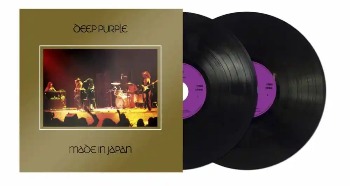
Their ‘Made in Japan’ set was actually the group's big break and still stands as a rare case where a live album does more than preserve a moment, finds Reagan Gavin Rasquinha.
On vinyl, it documents a band operating with absolute authority over volume, pacing, and risk. Recorded in 1972 across Osaka and Tokyo, at Festival Hall, Osaka and Nippon Budokan, Tokyo over the 15th – 17th August 1972, the performances catch Deep Purple in a state of total fluency. The playing is aggressive, extended, and unfiltered, yet never careless. You hear five musicians who know exactly how far they can push before the structure breaks, and who deliberately walk that edge all night.
The vinyl presentation matters. The soundstage is wide and physical, with room ambience intact. Crowd noise exists as atmosphere rather than intrusion. Side breaks add a sense of ceremony, forcing pauses that heighten anticipation. This is not background music. It demands attention and rewards it.
Disc One:
Side One:
Highway Star
The album opens at full throttle. The tempo is faster than the studio cut, with Ian Paice driving the band forward from the first bar. Ritchie Blackmore’s solo arrives early and cuts sharply, precise and unsentimental. Jon Lord answers with an organ run that feels classically informed yet violent in delivery. There is no warm-up here. The band establishes dominance immediately.
Child in Time
This track forms the emotional core of the record. Gillan’s vocal performance is raw and strained, which adds urgency rather than weakness. The quiet passages stretch with patience, allowing tension to accumulate naturally. When the band surges, it feels earned. Blackmore’s phrasing favors mood over speed, while Lord builds harmonic weight underneath. The long duration never drags because each section evolves with purpose.
Side Two:
Smoke on the Water
Stripped of studio familiarity, the song regains its weight. The riff sounds heavier, slower, and more deliberate. Gillan’s phrasing is looser, leaning into the crowd’s recognition without surrendering control. The solos are extended but grounded, turning a well-known anthem into a darker, more muscular piece.
The Mule
This track becomes a showcase for Ian Paice. His drum solo is fluid rather than flashy, built on motion and variation instead of brute force. The band drops out and re-enters with discipline, framing the solo rather than tolerating it. On vinyl, the drum tones sound deep and resonant, emphasizing touch and dynamics.
Disc Two:
Side One:
Strange Kind of Woman
The call and response with the audience introduces humor without diluting intensity. Gillan treats the crowd as an instrument, pushing and pulling their reactions. Blackmore mirrors this playfulness with bends and vocal-like phrasing. The song stretches far beyond its studio frame, becoming a performance rather than a rendition.
Lazy
Here the blues roots of the band surface most clearly. Lord’s organ intro sets a smoky, unhurried mood before the groove locks in. Gillan’s harmonica adds grit, and the band settles into a swinging pocket that contrasts sharply with the album’s heavier moments. The improvisation feels relaxed but alert, never drifting.
Side Two:
Space Truckin’
The closer is expansive and volatile. The structure dissolves and reforms repeatedly as solos collide and overlap. Blackmore pushes distortion and feedback, while Paice keeps the chaos anchored. The track feels dangerous in the best sense, as though it could collapse at any second yet never does.
‘Made in Japan’ captures Deep Purple as a live force rather than a studio construct. The vinyl preserves scale, tension, and momentum in a way few live records manage. It remains essential listening because it shows what happens when virtuosity meets conviction and refuses to play it safe.
By Reagan Gavin Rasquinha
Reagan Gavin Rasquinha is a writer who moves between high culture and backroom blues, tracing the quiet revolutions that shape what we see, feel and hear.
The writer can be contacted at reagangavin@gmail.com

