
08th June, 2026
 02nd March, 2026
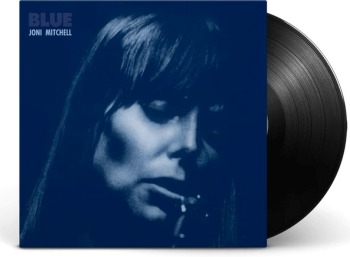
Joni's Mitchell's ‘Blue’ arrived at a time when metal and prog rock was on the ascendant. Perhaps that's why it holds it's own as a counterpoint, a non-cheesy exploration of 'sweet emotion' (like the early Aerosmith track of the same name), finds Reagan Gavin Rasquinha
To some embittered souls, love is a tar-pit trap [to quote a lyric fragment from Nirvana's Heart Shaped Box track from ‘In Utero’]. But for me and a whole lot of us, it is a celebration. Why wait for Valentine's day with a clutch of wilting daisies anyways? And so why not revisit on vinyl a famously confessional album of that, which also was a smash hit. But has remained endearingly personal.
I lower the needle on the modern pressing of ‘Blue’ and the first thing I hear is air. Not silence, not cleanliness, air. That faint analog hiss is not a flaw. It is the hush before an introspective journey announcing itself. Digital flattens this record into politeness. Vinyl leaves the warmth alive. Maybe it's imaginary but to me it's the large physical format. For a Gen Z ear trained on hyper clarity, this feels almost confrontational. You cannot doomscroll away from it.
There is something ritualistic in the act itself. Removing the sleeve. Placing the needle with care. These gestures slow the listener down before the music even begins. Blue does not reward impatience. It reveals itself only when given time and attention.
All I Want comes in restless and slightly sharp. Desire without diplomacy. She wants closeness but refuses to rehearse it. That impatience does not belong to the seventies. It belongs to anyone who has ever felt attraction move faster than labels and language. On vinyl, the dulcimer bites. The sound has grain. You feel fingers on strings, not a waveform.
My Old Man sounds simple until you actually listen. This is not romance as spectacle. It is attachment spoken quietly. Shared time, shared rhythm, no audience. The modern pressing keeps her voice intimate without sterilizing it. You hear breath, wood, room tone.
Little Green does not announce itself. It just arrives and changes the temperature. Loss, motherhood, separation, love that exists even when it cannot be enacted. None of this is dated. On vinyl, the fragility is physical. You lean in because the sound invites you to.
Carey shifts the album’s posture. Travel, escape, flirtation. The song smiles but does not relax. Even here, love is temporary housing. The rhythm feels light but impermanence lingers underneath.
Blue the title track does not summarize the album. It exposes it. Love as immersion, not resolution. Her voice on vinyl carries space around it. Silence is allowed to exist between lines. That space is rare in a culture that prefers constant noise.
California is longing disguised as confidence. Leave, miss, return, repeat. This emotional loop is structural, not generational. On vinyl, the acoustic guitar has weight. Distance costs something here.
This Flight Tonight is panic set to rhythm. Decision already made, doubt arriving too late. The pressing lets the track feel slightly out of control. That instability is the point.
River arrives and drops the room temperature. Loneliness without ornamentation. The analog hiss before the piano enters feels like cold air before snow. Vinyl makes this song feel isolated. Pretty is not what this song is.
A Case of You is intimacy without performance. Loving someone fully while understanding the shelf life. The song refuses to age because it documents rather than moralizes. On vinyl, the dulcimer sits close to the voice. Nothing is framed for approval.
The Last Time I Saw Richard closes the record by confronting emotional cowardice. Cynicism as armor. Romance as risk. The piano sounds present and imperfect. The album ends without closure because life rarely provides it.
For a Gen Z listener, ‘Blue’ does not need contextual excuses. What matters is how it behaves as an object. Vinyl forces pacing. Side A ends. You stand up. You flip. You return. That interruption mirrors the emotional architecture of the record. This is not a playlist pretending to be an album. It is an album that demands physical participation.
Historically, this record sits in opposition to later love aesthetics. By the time Celine Dion and Whitney Houston dominated the nineties, love had become architectural. Huge rooms. Perfect lighting. Voices engineered for awe. Joni wrote love as interior weather. Just proximity. That difference explains why Blue feels current while many flawless records feel sealed in their era.
From a collector’s perspective, pressings matter. Original copies have character but also wear. Modern reissues range from respectful to overly sanitized. The better cuts preserve dynamic range and resist compression. That faint hiss is part of the emotional circuitry.
‘Blue’ survives because it never tried to scale itself up. It stayed human sized. That scale translates across decades because emotional truth does not need resolution upgrades. For a new audience raised on speed and polish, this record offers something rarer than relevance. It offers presence.
Honorable mentions:
21 functions almost like a confessional diary. Listen side A to B as emotional progression rather than track list. Pressing quality matters here as well. The better ones leave space for restraint to speak.
By Reagan Gavin Rasquinha
Reagan Gavin Rasquinha is a writer who moves between high culture and backroom blues, tracing the quiet revolutions that shape what we see, feel and hear.
The writer can be contacted at reagangavin@gmail.com
