
07th June, 2026
 15th May, 2026
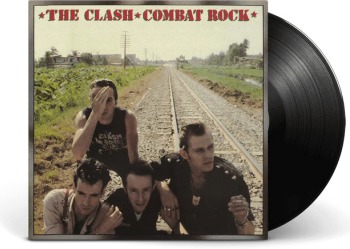
The Clash was one of the few punk groups that was able to evolve and yet not lose their punk roots. Reagan Gavin Rasquinha finds enough evidence of that in their ‘Combat Rock’ album…
Sitting here in Berkshire, I found myself hearing a track on the radio that I hadn’t heard in ages… Should I Stay Or Should I Go by The Clash. That’s when the local RJ said that it was released on 14th May, and what an album it was… ‘Combat Rock’. It’s definitely worth getting on vinyl for sure.
About the backdrop, it was that time in England. The youth had had their fill of 60s psychedelia. The 70s was done. Led Zeppelin had split up, a lot of 70s acts had run their course, grappling with how to change their sound for the synth-heavy 80s. Kids wanted the urgency of punk, but the clash managed to make funk into even a bit of funk. It reached a point of friction with ‘Combat Rock’ where the raw, jagged edges of their early punk identity began to fuse with a sophisticated, globalist funk, creating a record that feels like a neon night pulse in a crowded city.
Released in 1982, the album on vinyl is a stark departure from the compressed wall of sound found on their earlier works, offering a vast, atmospheric soundstage that demands a high-fidelity setup to decode. Unlike the digital versions that often emphasize the high-end snap of the percussion, the analog grooves capture a rumbling romp in Paul Simonon’s bass lines, particularly on tracks where the reggae influence begins to gyrate into the mix.
The above mentioned track is the most famous track on ‘Combat Rock’. It sits as the third track on Side One, nestled between the urban paranoia of Car Jamming and the funkadelic Rock the Casbah. High-octane, and was an instant ticket to the charts. The analog format does a superior job of capturing the ‘clatter’. There is a specific, messy joy in the way the guitars bleed into the drum mics during the chorus. In a digital file, that bleed can sound like clipping or hiss, but on a spinning disc, it sounds like a band actually playing in a room together. It is the bridge between their 1977 punk roots and the stadium-sized ambition they were grappling with in 1982.
It feels entirely different from the rest of the LP, yet the album would lose its structural integrity without it. It’s the hook that keeps the listener grounded before the band drags them back into the more complex, rhythmic thicket of Side Two.
You’ll find yourself flipping the record over just to see if they can maintain that level of friction, only to realize the genius of the album lies in how it trades that simplicity for something far more haunting.
Know Your Rights has a sharp, percussive attack that immediately highlights the record's dynamic range, where the space between Joe Strummer’s snarling vocals and the staccato guitar stabs remains wide and breathable. The vinyl preserves a certain mechanical grit in the telecaster’s tone, avoiding the sterile sheen of later remasters and allowing the natural distortion of the amplifiers to occupy a physical presence in the room. This is the sound of a collective wrestling with a crumbling world, and the analog format captures that tension without fatiguing the listener’s ears.
Moving into Rock the Casbah, the interplay between the disco-inflected drum beat and the piano hook reveals a sophisticated layering that often gets lost in the mid-range soup of a streaming playlist. On a well-calibrated turntable, you can hear the precise decay of the cymbals and the way the hand percussion dances across the stereo field, creating a rhythmic depth that feels three-dimensional. The track serves as a reminder that the band had mastered the art of the groove, using the physical limitations of the vinyl to ensure that the low-end frequencies remain punchy and defined rather than muddy or overbearing.
Straight to Hell is perhaps the most compelling reason to experience this album in its original format, as the haunting, minimalist arrangement relies heavily on the atmospheric "air" around the instruments. The subtle, echoing guitar licks and the distant, rhythmic thud of the drums create a cinematic texture that requires the silent floor of a clean pressing to truly resonate. There is a profound sense of melancholy in the way the vocals sit just behind the beat, a nuance that is frequently flattened during digital normalization.
The record refuses to provide a tidy resolution, instead pulling the listener into a dense, swirling landscape of urban paranoia and rhythmic experimentation. It is a work that insists on being heard as a singular, cohesive movement where the transitions between the tracks are as vital as the melodies themselves. Each rotation of the disc uncovers a new layer of sound, from the faint hiss of a tape loop to the gritty resonance of a bass string being pulled to its limit. Drop the needle on this one and let the humid, neon-lit world of the early eighties reclaim your living room.
By Reagan Gavin Rasquinha
Reagan Gavin Rasquinha is a writer who moves between high culture and backroom blues, tracing the quiet revolutions that shape what we see, feel and hear.
The writer can be contacted at reagangavin@gmail.com

