
11th August, 2026
 03rd August, 2026
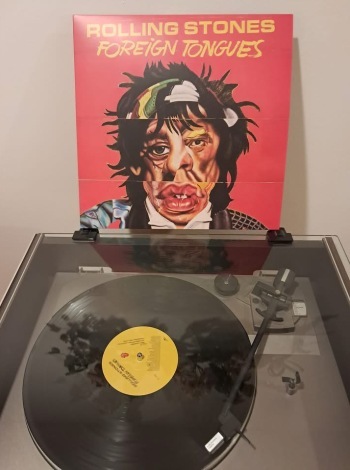
Showing no signs of hanging up their gloves, the Rolling Stones gather no moss in their latest studio outing, finds Reagan Gavin Rasquinha
In a contemporary world defined by relentless geopolitical friction and social turbulence, reviewing a new studio album by among the last remaining ‘60s ‘soul survivors’, to invoke a track name from ‘Exile on Main Street’, feels like an intentional gear change onto a quiet, scenic side road. Approaching modern output from the Rolling Stones requires navigating two conflicting critical approaches.
Methodology:
The first methodology automatically awards a gold medal, praising the technical competence required for octogenarian musicians to produce polished studio tracks, while blessing their continued willingness to release new material.
The second approach evaluates the work strictly on its contemporary merits, refusing to grant immunity based on past glory or brand power. Under this rigorous evaluation, the record acts as an agreeable addition to an expansive musical buffet instead of an essential artistic breakthrough.
It displays precise studio craft and high execution levels, yet it lacks an organic, definitive standout track capable of standing alongside their mid-century triumphs without the aid of algorithmic single placement and corporate radio strategy.
Context:
Historical context clarifies the distinction between vital artistic creation and late-career inventory management. Dedicated listeners recognize ‘Some Girls’ as their final indisputable masterpiece, an era where the rising pressure of punk and disco forced the group into a lean, aggressive songwriting posture. The subsequent decades offered respectable landmark entries, including the stadium-focused resurgence of ‘Steel Wheels’, the tailored commercial appeal of singles like Love Is Strong, and the solid rock construction across ‘Bridges to Babylon’ and ‘A Bigger Bang’. The most convincing statement of their late period remains ‘Blue and Lonesome’, an album that succeeded precisely because it bypassed commercial ambition to focus on an immediate, disciplined return to foundational blues covers.
Unburdened by the need to manufacture modern pop hits, the band recorded those tracks with a tight, non-rambling efficiency that reflected their true strengths as a structured blues outfit rather than an aimless jam group. Contemporary original releases, by comparison, carry heavy promotional calculation, relying on engineered lead tracks tailored to satisfy streaming metrics and digital consumer habits.
The Musicianship:
A deep examination of the broader musicianship reveals a production aesthetic defined by modern digital correction and severe acoustic isolation. Mick Jagger’s lead vocals occupy the absolute center of the mix, displaying extraordinary physical power and pitch control, though heavy dynamic compression and subtle tuning software reduce the natural human gravel that once gave his delivery its emotional weight.
The guitar balance between Keith Richards and Ronnie Wood retains their signature rhythmic interlocking, yet the modern recording process separates their amplifiers into clean, isolated frequency bands. This separation eliminates the messy microphone bleed and room resonance that made their seventies recordings sound so delightfully volatile.
The physical absence of Charlie Watts fundamentally alters the internal dynamic of the rhythm section. Steve Jordan delivers a powerful, technically flawless drum performance characterized by muscular drive and snare accuracy, yet he hits directly on the center of the beat. Watts brought an irreplaceable jazz sensibility to the group, playing slightly behind the beat to create the loose, swinging pocket that defined the band's classic groove. Without that specific rhythmic delay, the current rhythm section operates with standard rock precision rather than their historic swing.
Analyzing the lead single Angry demonstrates the sonic fingerprints of contemporary pop-rock production. Constructed around a classic Keith Richards open-G tuning riff, the track uses heavy transient shaping to give the drums an immediate, explosive front. The mix applies aggressive sidechain compression and brickwall limiting, pushing the guitars into a dense mid-range slab while locking the bass into a rigid sub-frequency floor.
Musically, the song relies on a straightforward Mixolydian harmonic framework, driven by syncopated guitar chops and a hyper-controlled vocal performance that prioritizes rhythmic punch over tonal nuance.
Among the album highlights, Sweet Sounds of Heaven offers a stark contrast in studio dynamics, opening up significant acoustic headroom and spatial width. Built around a slow gospel chord progression in C major, the track features Stevie Wonder on Fender Rhodes and Hammond B3 organ, providing a rich harmonic cushion beneath a call-and-response vocal duel between Jagger and Lady Gaga. The production on this centerpiece allows the master bus compression to breathe, preserving raw dynamic variance as the brass section and vocals build to an uncompressed climactic crescendo.
Conversely, Bite My Head Off leans into aggressive overdrive, featuring Paul McCartney playing a heavily distorted fuzz bass. The track operates at a rapid punk tempo, characterized by prominent upper-midrange frequency saturation, hard-panned rhythm guitars, and an upfront drum mix that captures a kinetic, live-in-the-room energy rarely seen elsewhere on the record.
Conclusion:
Ultimately, this record sits at the intersection of fan loyalty and compulsive professional habit. Supported by a global galaxy of dedicated listeners who ensure immediate chart-topping status, the album satisfies the band's internal requirement to continue doing the only thing they know how to do, serving as an operational soundtrack for their stadium tours rather than a reinvention of their sound.
Foreign Tongues is a banger!
By Reagan Gavin Rasquinha
Reagan Gavin Rasquinha is a writer who moves between high culture and backroom blues, tracing the quiet revolutions that shape what we see, feel and hear.
The writer can be contacted at reagangavin@gmail.com

